
Tokenization
When ownership becomes Programmable

TL;DR
Tokenization is not just about putting assets on-chain.
It’s about what happens when ownership becomes executable software — enforced by logic, not institutions.
Once ownership becomes state, transfers become atomic, rules become embedded, access becomes cryptographic, and markets stop needing managers.
Most people think tokenization simply means putting assets on-chain.
Real estate tokens.
RWAs.
NFTs.
Gold, stocks, treasuries now “on the blockchain.”
This understanding isn’t entirely wrong, but it’s incomplete. Because tokenization isn’t primarily about what you put on-chain. It’s about what fundamentally changes when ownership becomes software.
The Common Misunderstanding
In most discussions, tokenization is framed as a packaging exercise:
Take an existing asset
Put it on-chain
Let people trade it
But this misses the real shift.
Tokenization is not about digitizing assets.
It’s about turning ownership into executable state, enforced by logic, not institutions.
What Tokenization Actually Is
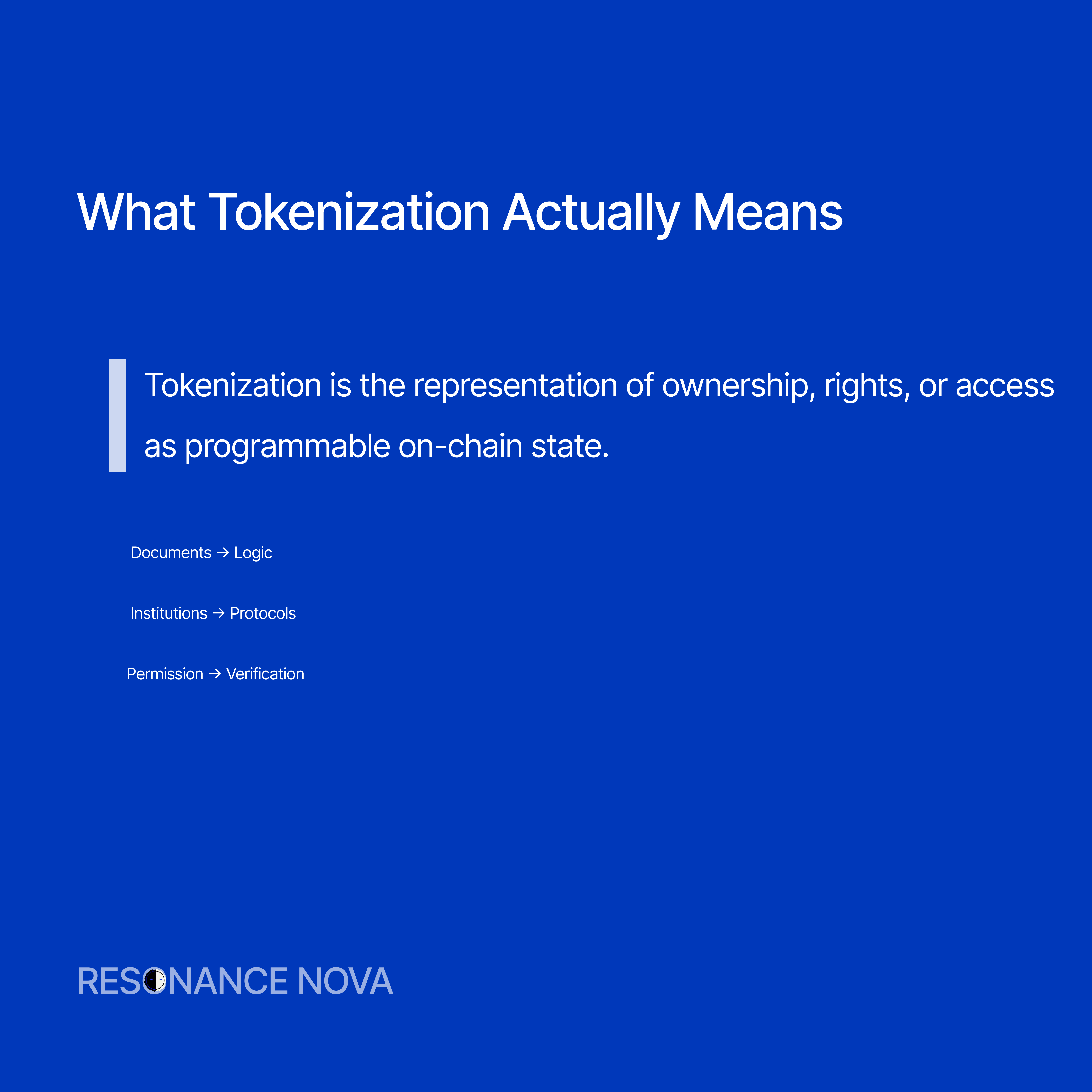
Tokenization is the process of representing ownership, rights, or access as programmable on-chain state.
Once ownership becomes state inside a system, everything downstream changes.
Not gradually but structurally.
Ownership Becomes State — Not Records
Before tokenization
Ownership exists as a record:
• A database entry
• A registry
• A legal document
• A ledger maintained by an institution
These records are descriptive.
They describe who should own what.
If there’s a dispute, humans interpret records, institutions decide, and changes happen manually.
After tokenization
Ownership is state inside the system itself.
The system doesn’t describe ownership.
It is the authority.
Changing ownership is simply updating state — cryptographically enforced, globally verifiable, and final.
Ownership moves from interpretation to computation.
Transfer Becomes Atomic — Not Reconciled
Before
Transfers happen in stages:
• Sender initiates
• Receiver waits
• Multiple systems update
• Clearing and reconciliation follow
This creates:
• Delays
• Failed settlements
• Counterparty risk
After
On-chain transfers are atomic.
They either:
• Fully execute, or
• Don’t happen at all
In one action.
With immediate finality.
No reconciliation.
No rollback.
Rules Become Embedded — Not Enforced Later
Before
Rules live outside the asset:
• Legal contracts
• Policies
• Compliance procedures
Enforcement happens after the fact, often through courts or institutions.
After
Rules live inside the asset itself.
Who can transfer.
When transfers are allowed.
Royalties.
Restrictions.
If an action violates the rules, the system simply won’t execute it.
Compliance shifts from supervision to execution.
Access Becomes Cryptographic — Not Institutional
Before
Access depends on:
• Gatekeepers
• Approvals
• Accounts
• Jurisdictional permissions
After
Access depends on:
• Keys
• Signatures
• On-chain conditions
No intermediaries, no discretionary approval, just provable cryptographic truth.
The Unifying Shift
All of these changes stem from one transformation:
Ownership moves from trust-based systems to trustless execution.
Once that happens:
• Transfers don’t need reconciliation
• Rules don’t need enforcement
• Access doesn’t need permission
• Markets don’t need managers
Not because people are better, but because the system no longer relies on them.
Digitization vs Tokenization
This distinction matters.
Digitization:
• Assets are recorded digitally
• Ownership is still interpreted externally
• Institutions remain the final authority
Tokenization:
• Ownership exists as executable state
• Rules are enforced by logic
• Settlement is native and immediate
A PDF deed is digitized, a tokenized deed executes, a spreadsheet share is digitized.
A tokenized share settles instantly and composes with other systems.
What Tokenization Actually Enables
When ownership becomes programmable, systems unlock:
• Permissionless markets
• Global access to assets
• Fractional ownership
• Programmable finance
• Autonomous coordination
Tokenization isn’t about bringing assets on-chain.
It’s about removing the need for trust, reconciliation, and managerial oversight by embedding them directly into the system. That’s the shift most people miss.
Resonance Takeaway
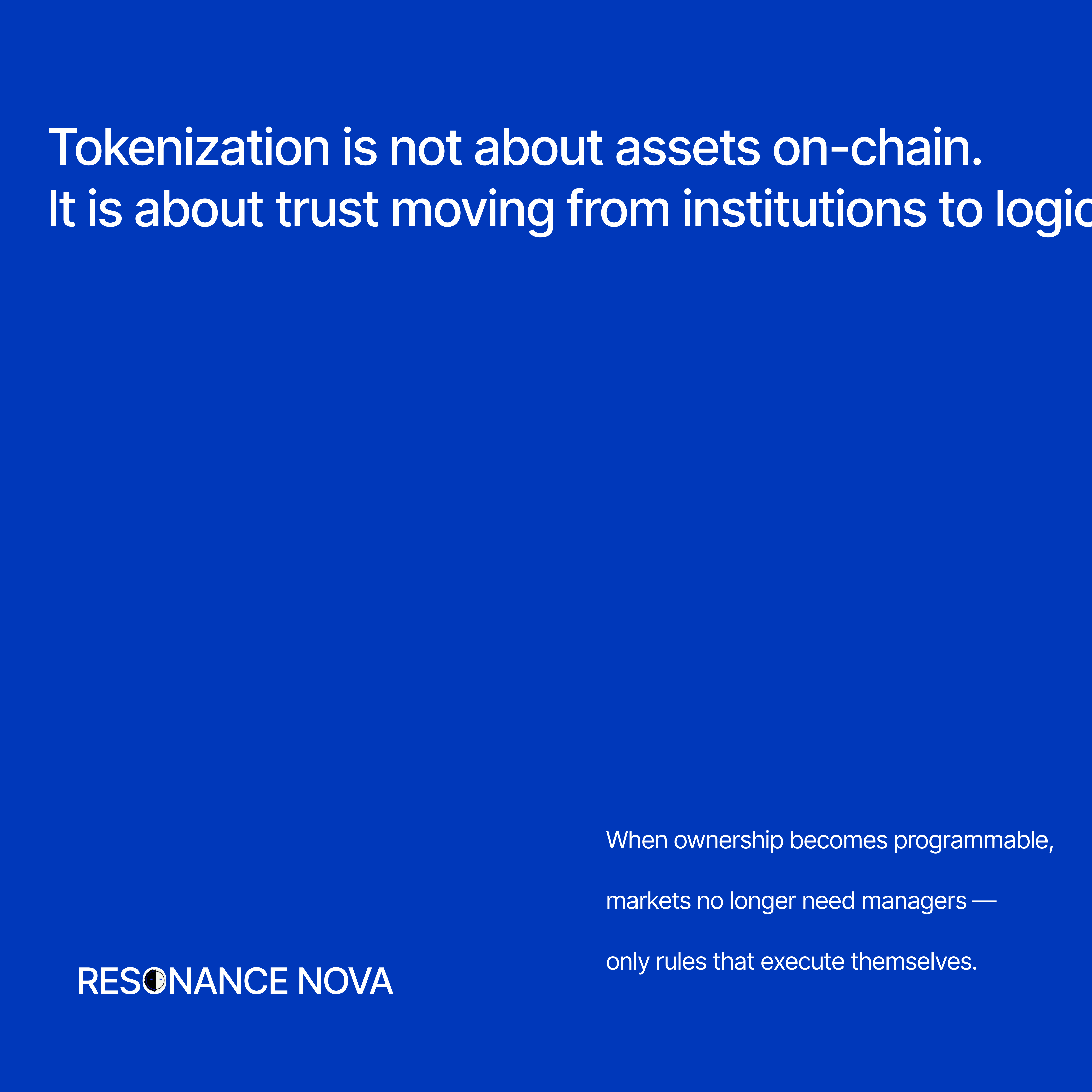
Tokenization is not a product feature, It’s a change in how ownership exists.
Once ownership becomes software, everything built on top of it must be re-thought.
Stay with the work
Resonance Nova publishes long-form essays on crypto systems, digital culture, and networked identity.
If this piece was useful, you can follow the publication here: